Breach of Fiduciary Duty: What Business Partners Owe Each Other
Fiduciary duties can govern self-dealing, conflicts of interest, and misuse of company assets. Learn how a person's role, disclosure, and the transaction affect a New York claim.

A preliminary injunction can restrain conduct while a case is pending. New York requires likelihood of success, irreparable harm, and favorable equities, supported by clear and convincing evidence.
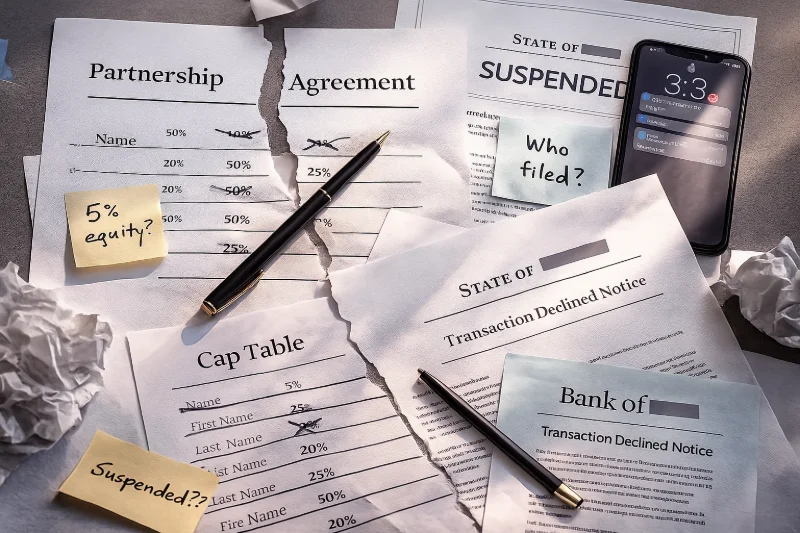
Your shares still carry your name, but the profit, the paychecks, and the information have quietly stopped. That's a freeze-out, and the warning signs appear long before the lowball buyout offer.
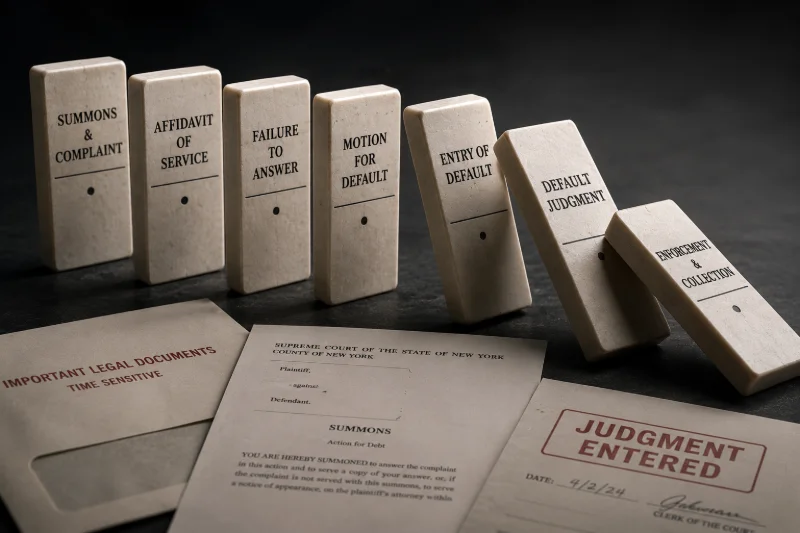
A default judgment may be challenged under several grounds. The required proof and deadline depend on the ground, service, and notice of entry—not one universal test.
A default judgment can expose a business to collection. Learn the response deadlines, proof the plaintiff must supply, and possible routes to challenge the judgment.
Does a claim belong to the company or to an owner personally? Learn the direct-versus-derivative distinction, demand requirements, and procedural risks in New York ownership disputes.
The envelope arrived this week. A law firm letterhead, a formal tone, a specific demand. The next 48 hours determine what evidence gets preserved, what becomes an admission, and whether you sue first.
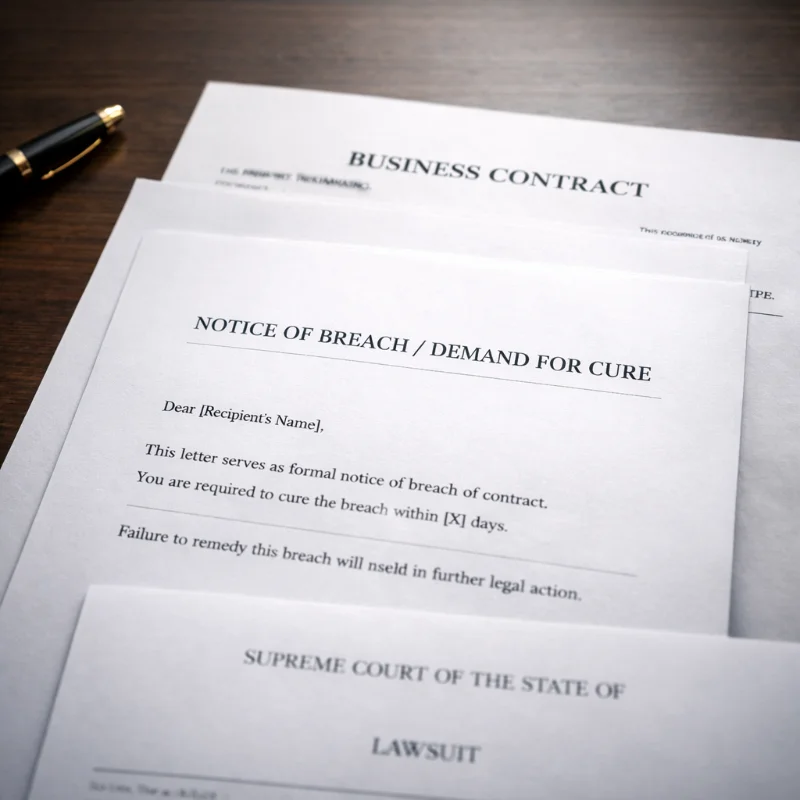
The deadline in your demand letter has passed. No response. No call back. Silence is not the end of the matter — it's the moment contract dispute litigation actually begins.
Your business has stopped moving. Every vote is a tie, every decision is a fight. New York law has a mechanism for this — but it almost certainly doesn't work the way you think.
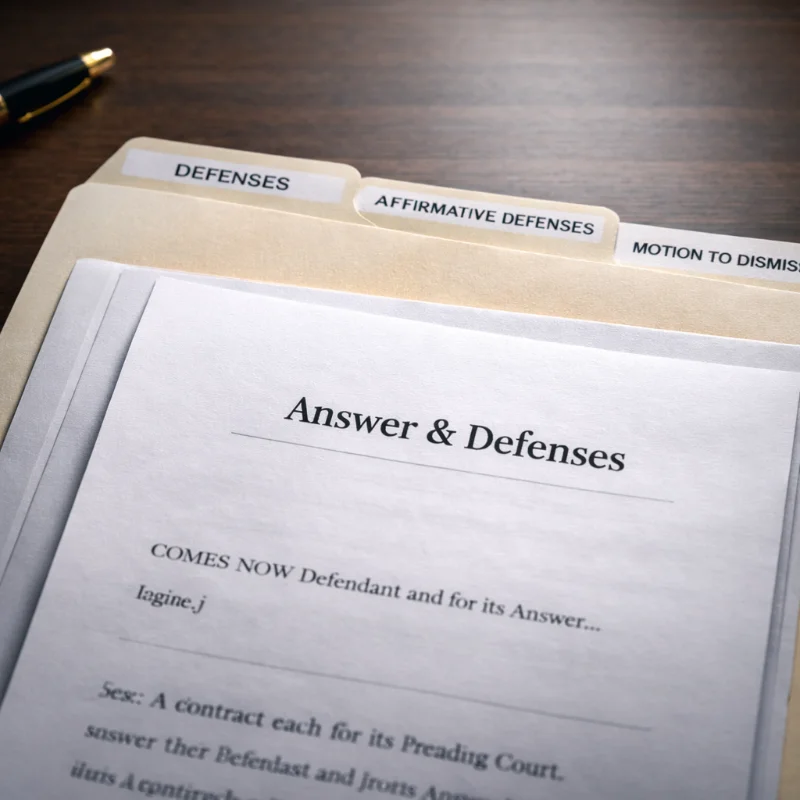
A breach of contract lawsuit doesn't mean you've lost. New York law gives defendants powerful defenses — from procedural knockouts to arguments that gut the claim entirely.
Yes — but proving one existed is the real challenge. Learn which oral agreements hold up in court, which ones the Statute of Frauds kills, and how to protect your business.
Every breach of contract lawsuit filed in New York rises or falls on four elements. Miss one, and a judge can dismiss your case before you ever reach a courtroom.
A transfer you didn't authorize. Invoices that don't add up. A bank balance that keeps shrinking. When a partner is stealing, your first 30 days matter more than any court date. Here's what to do — and what not to do.
New York owners may have enforceable rights to inspect company records. The entity type, records requested, purpose, and governing agreement affect the scope and procedure.
When a business owner says 'we're going to sue,' the real question isn't whether a breach occurred — it's what the breach is worth. Direct damages, lost profits, consequential damages, and liability caps all determine what you actually collect.
Many New York contract claims have a six-year limit; sales-of-goods claims generally have four. Accrual, shorter contractual deadlines, and applicable exceptions can change the analysis.
Learn the New York enforceability framework, how proposed non-compete legislation differs from current law, and what business owners should review before relying on a restriction.
A demand letter isn't a formality — it's the first move in a legal strategy. Learn what to include, what to leave out, and when to skip the letter and file suit.
Almost never. The Rocanova four-part test, what compensatory damages you can actually recover, and when the rare exception applies.
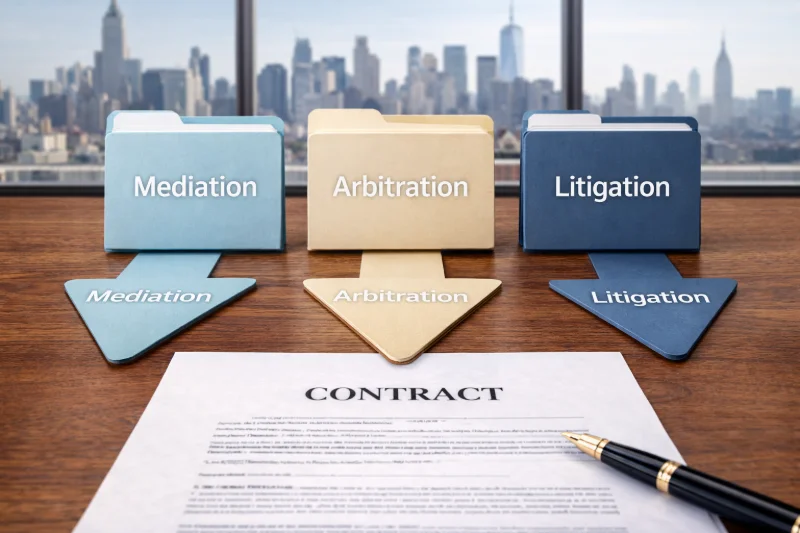
Mediation, arbitration, and litigation each carry distinct costs, timelines, and risks. Here's how to choose the right path for your NYC contract dispute.
Filing fees, attorney costs, expert witnesses, and discovery expenses — the real cost breakdown for NYC business owners before you sue.
Most business partnerships do not collapse in a single dramatic moment. They deteriorate slowly. One partner starts making decisions without looping the other in. Financial transparency becomes selective.
Payment disputes, mechanic's liens, change orders, delays, and defective work can put a project at risk. Learn how New York rules and the contract shape an owner's or contractor's options.
Most business disputes don't begin with an obvious refusal to honor a signed agreement. They begin with something less dramatic. One side says there was a deal. The other says negotiations were still ongoing.
Minority shareholders in closely held corporations face squeeze-outs, frozen dividends, and exclusion from management. New York law provides specific protections.
No articles found.
Free Case Analysis
Kleyman Law Group represents business owners in contract disputes, partnership breakdowns, and commercial real estate matters across Brooklyn, Queens, Manhattan, and Staten Island.