Business Formation & Dissolution in New York
Strategic legal guidance from entity selection to exit strategy—serving businesses across Brooklyn, Queens, Staten Island, and Manhattan.
Business Formation & Dissolution
The Complete Business Lifecycle
Every successful business begins with proper formation and eventually requires strategic exit planning. Whether you're launching your first venture or closing a decades-old enterprise, the legal framework you establish—or dismantle—determines your personal liability exposure, tax obligations, regulatory compliance burdens, and ultimate financial outcomes.
New York business law governs both formation and dissolution through interconnected statutes requiring careful navigation. Most entrepreneurs focus on startup excitement, overlooking how formation decisions constrain future options. The entity structure you choose, operating agreements you draft, and filings you complete at inception directly impact dissolution complexity years later.
Similarly, business owners facing closure often discover their formation documents lack dissolution provisions, creating unnecessary legal battles and financial losses during wind-down. KLG Law approaches business formation and dissolution as integrated lifecycle stages requiring coordinated planning throughout Brooklyn, Queens, Manhattan, and Staten Island.
Our attorneys structure new entities anticipating future transitions—whether growth, sale, or closure. When dissolution becomes necessary, we leverage formation documents to streamline the process, minimize disputes, and protect owner interests. This lifecycle perspective distinguishes strategic business counsel from basic transactional document preparation.
Business Formation in New York
Choosing Your Entity Structure
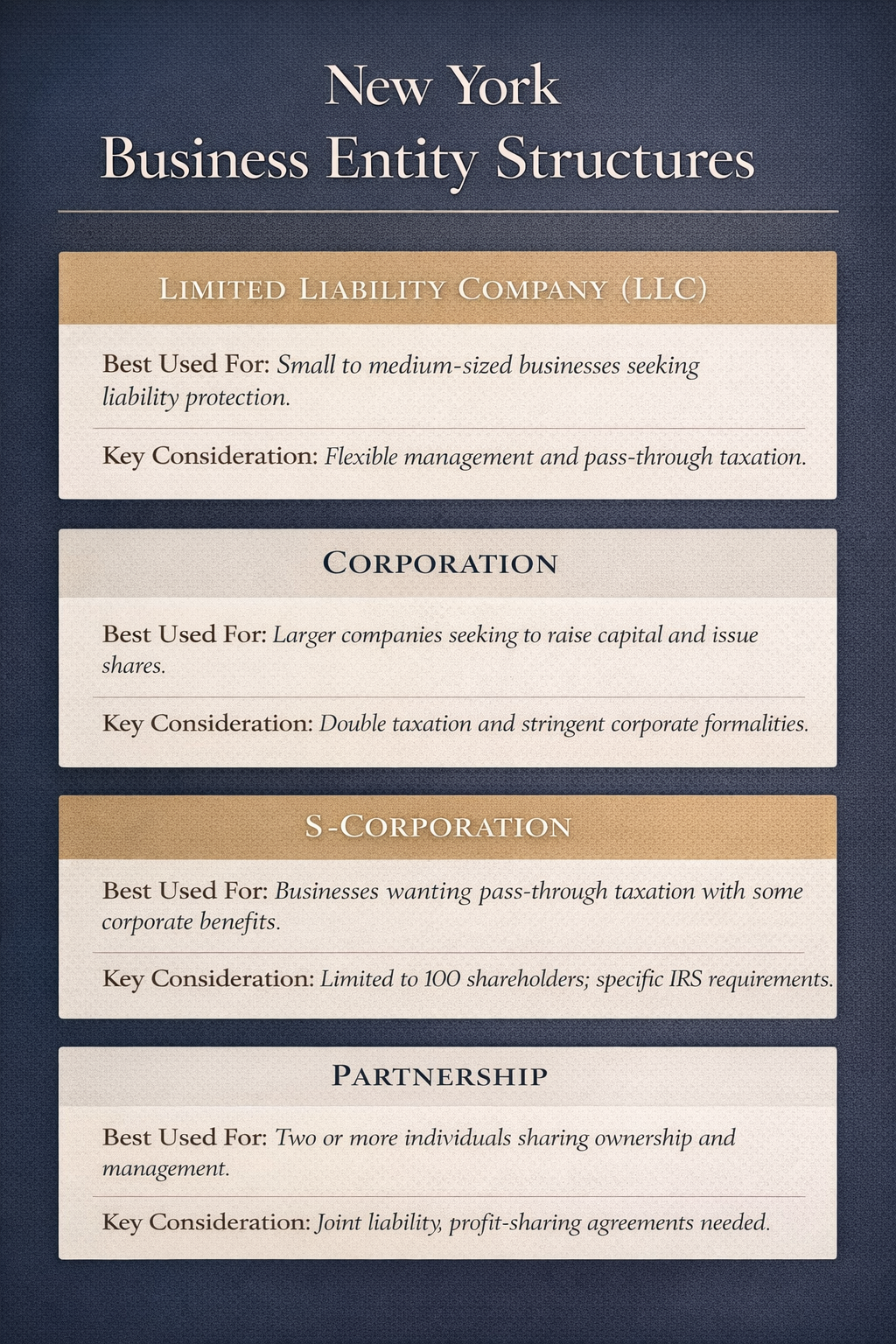
Business formation establishes the legal framework defining ownership rights, management authority, liability exposure, and tax treatment. New York law recognizes multiple entity types—each offering distinct advantages and limitations depending on your business model, growth objectives, and tax planning needs. Businesses across Brooklyn, Queens, Manhattan, and Staten Island must navigate these requirements carefully.
The formation process involves selecting the appropriate entity structure, drafting governing documents, filing required certificates, obtaining necessary licenses, and establishing ongoing compliance systems. LLC formation requires filing Articles of Organization with the Department of State and publishing notice in two newspapers for six consecutive weeks—a unique New York requirement. Entrepreneurs acquiring an existing business face additional due diligence requirements.
Operating agreements and bylaws constitute internal governance documents controlling business operations, owner relationships, and exit procedures. Well-drafted agreements address capital contributions, profit allocation, management authority, transfer restrictions, and dissolution provisions—preventing costly litigation by establishing clear rules from the start.
The entity you select determines how profits flow to owners, what formalities must be maintained, how ownership transfers, and what happens if partners disagree. Corporations require formal governance structures. LLCs offer flexibility with comprehensive operating agreements. These structural decisions follow your business throughout its lifecycle—making experienced legal guidance essential.
New York's publication requirement adds $1,000-$2,000 to LLC formation costs in NYC—an expense many entrepreneurs don't anticipate. County-specific newspapers charge varying rates, and failure to complete publication within 120 days can result in LLC suspension. Professional guidance ensures compliance while identifying cost-saving opportunities where available.
Business Dissolution in New York
Business dissolution terminates a company's legal existence, requiring systematic wind-down of operations, asset liquidation, creditor payment, tax clearances, and formal filing with the Secretary of State. Strategic planning minimizes tax liability, protects personal assets, and ensures proper closure preventing future liability exposure.
Many business owners simply stop operating without formal dissolution—creating ongoing tax obligations, potential personal liability, and administrative complications requiring expensive corrective procedures years later. Proper contract review during dissolution protects against claims from vendors, landlords, partners, and former employees.
Improper dissolution—particularly failing to provide adequate creditor notice or pay claims before distributing assets—creates personal liability for directors and shareholders. Proper dissolution requires identifying all creditors, establishing claims procedures, and obtaining releases before any final distributions to owners. Outstanding contract claims must be resolved or reserved for.
Reinstating administratively dissolved entities requires filing overdue reports, paying back taxes with penalties and interest, and submitting reinstatement applications to the Department of State. Well-drafted operating agreements with dispute resolution and buyout provisions help business owners avoid costly judicial dissolution proceedings. Some owners find selling the business preferable to dissolution.
Dissolution Procedures
Three Paths to Business Closure
Voluntary Dissolution
Business owners decide to close due to retirement, failure, or strategic pivots. Requires member/shareholder approval, filing dissolution certificates, winding up affairs, and obtaining necessary tax clearances.
Involuntary Dissolution
State administratively dissolves businesses for failure to file reports, pay franchise taxes, or maintain registered agents. Doesn't eliminate outstanding debts but terminates good standing and ability to conduct business.
Judicial Dissolution
Courts dissolve businesses when voluntary dissolution becomes impossible—typically due to management deadlock, minority oppression, or owner disputes. Requires forensic accounting and extended litigation.
Tax Obligations and Asset Distribution
Secured Creditors
Creditors holding collateral receive payment first based on perfected security agreements and recorded lien positions.
Employee Wages
Unpaid wages, accrued vacation, and payroll tax obligations receive priority immediately after secured creditor claims.
Tax Obligations
Federal and state tax liabilities including franchise taxes and withholding must be fully satisfied before any owner distributions.
Owner Distribution
Owners receive remaining assets according to ownership percentages only after all creditor claims are fully satisfied.
Business dissolution creates significant tax obligations requiring careful planning. Final tax returns must be filed with the IRS and New York State Department of Taxation and Finance. The business must obtain tax clearance certificates confirming all taxes have been paid before the Department of State accepts dissolution certificates.
Failure to obtain tax clearances results in ongoing tax liability, interest accumulation, and potential personal liability for responsible parties. Distributing assets to owners before paying creditors violates New York law, creating personal liability for directors, officers, and members who authorize or receive improper distributions. Debt collection actions may continue against improperly dissolved entities.
Whether you're selling your business or closing operations entirely, proper dissolution planning minimizes tax consequences, resolves ownership disputes, and achieves clean exits. Business owners across Brooklyn, Queens, Manhattan, and Staten Island rely on experienced counsel to navigate creditor priorities and protect personal assets from post-dissolution claims.
Serving Businesses Throughout New York City
When You Need Formation vs. Dissolution Counsel
Business Formation Makes Sense When:
Business Dissolution Becomes Necessary When:
Starting a New Venture
Launching any business requiring liability protection, partnership structure, or formal entity status for banking and contracts.
Retirement or Exit
Owners ready to retire or exit operations need formal dissolution protecting against ongoing liability and tax obligations.
Converting Sole Proprietorships
Growing informal businesses need liability protection, partnership admission, or outside investment requiring formal entity structure.
Business Failure
Unprofitable ventures or changed market conditions require orderly wind-down protecting owner assets from creditor claims.
Real Estate Investment
Acquiring rental properties, commercial buildings, or development projects requiring liability isolation and pass-through taxation.
Partnership Disputes
Irreconcilable owner disagreements, management deadlock, or minority oppression necessitate dissolution or negotiated buyouts.
Raising Capital
Seeking loans, investors, or venture funding requiring formal corporate structure with ownership documentation and governance.
Strategic Reorganization
Merging with another business, restructuring ownership, or pivoting models may require dissolving and forming new structures.
Multiple Owners
Business partnerships require written agreements governing management, profit distribution, dispute resolution, and exit procedures.
Sale of Business
Selling company assets or stock often involves dissolving the selling entity after transaction close with careful coordination of tax obligations and creditor claims.